Japan's Most Stylish Ryokans: Where Tradition Meets Timeless Luxury
Discover Japan's most stylish ryokans, where centuries-old traditions create...

Standing at the entrance of a traditional ryokan, shoes carefully placed in the genkan, you cross an invisible threshold between worlds. Outside, the rush of contemporary life continues unabated. Inside, time moves to an entirely different rhythm—one measured in the rustle of kimono silk, the gentle pour of sake, and the steam rising from a cypress wood bath.
The Art of Omotenashi
The Japanese concept of omotenashi—hospitality from the heart—transforms a ryokan stay from mere accommodation into an experience that lingers in memory for years. Unlike Western hotels where service can feel transactional, omotenashi anticipates needs before they're expressed, creating a seamless flow of comfort that feels almost intuitive.
At the finest ryokans, your nakai-san (personal attendant) becomes something between a guardian and a guide. She'll prepare your room with exacting precision, arrange your kaiseki dinner with theatrical flair, transform your dining space into a sleeping sanctuary whilst you bathe, and ensure that every moment unfolds with effortless grace.
Architectural Poetry
The most stylish ryokans are masterclasses in minimalist design—not the stark, cold minimalism of modernist architecture, but the warm, intentional simplicity of wabi-sabi. Every element serves a purpose, from the carefully positioned tokonoma alcove displaying a seasonal scroll and ikebana arrangement, to the sliding shoji screens that frame views of meticulously maintained gardens like living paintings.
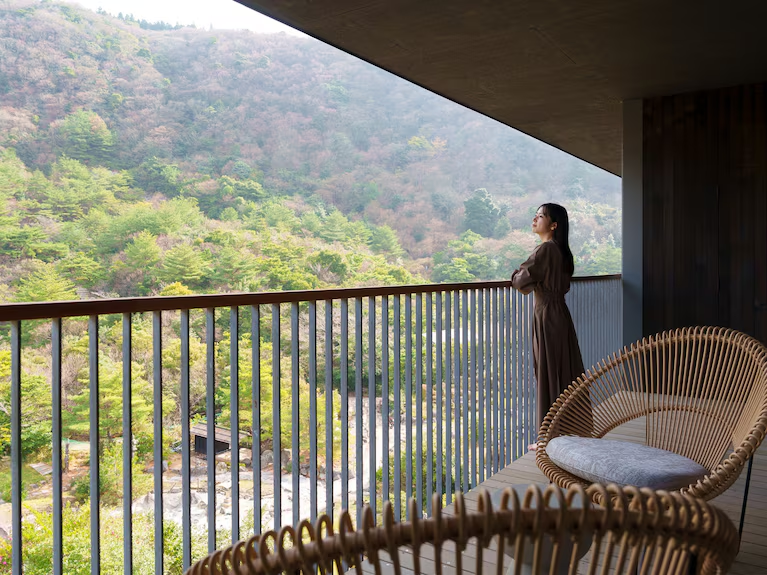
Hoshinoya Kyoto, accessible only by boat along the Oi River, exemplifies this architectural poetry. Each room offers river views through floor-to-ceiling windows, whilst retaining traditional tatami flooring and low furniture that keeps one's gaze eternally humble and connected to the earth.
Further south, Gora Kadan in Hakone occupies the former summer villa of the Kaninnomiya Imperial family. Here, the architecture speaks of refined imperial taste—sukiya-style buildings where nobility once retreated from the formality of court life, surrounded by gardens that change dramatically with each season.
The Ritual of Bathing
No ryokan experience is complete without understanding the Japanese relationship with water and bathing. This isn't merely about cleanliness—it's a spiritual practice, a meditation, a return to elemental simplicity.
The finest ryokans source their water from natural onsen (hot springs), each with distinct mineral compositions that the Japanese believe offer specific healing properties. At Nishimuraya Honkan in Kinosaki, you can experience soto-yu meguri—the tradition of wandering between the town's seven public bathhouses, each with its own character and supposed benefits.
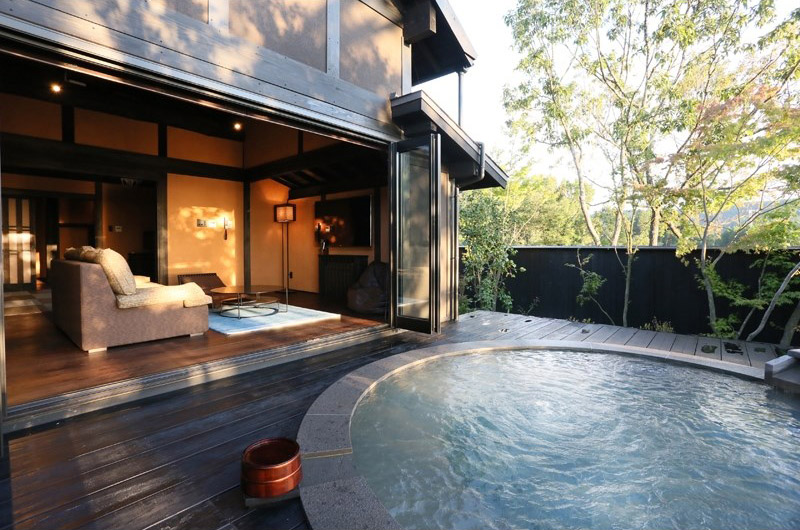
Private rotenburo (outdoor baths) attached to guest rooms represent the ultimate luxury. Imagine soaking in steaming mineral water beneath a canopy of maple trees, snowflakes melting on your shoulders, whilst the scent of hinoki (Japanese cypress) envelops you. This is the privilege offered at establishments like Kayotei in Ishikawa, where every suite features its own expansive private onsen overlooking the Sea of Japan.
Kaiseki: Culinary Theatre
If ryokans are temples to tranquillity, their kaiseki dinners are evening prayers—intricate, seasonal, and deeply reverent of ingredients. Kaiseki originated in the tea ceremony tradition, where small portions of exquisite food prepared the palate and spirit for the contemplative act of drinking matcha.
Today's kaiseki represents the pinnacle of Japanese haute cuisine. At Arashiyama Benkei, Chef Ito sources ingredients from a radius of exactly 50 kilometres, believing that terroir—the taste of place—should define every meal. Your dinner might include ayu (sweetfish) from the Hozu River, served simply to celebrate its seasonal perfection, followed by Kyoto beef so marbled it appears almost abstract.
Each course arrives with theatrical precision: aperitifs (sakizuke), clear soup (suimono), sashimi (otsukuri), a grilled course (yakimono), a steamed course (mushimono), and onwards through seven to fifteen dishes, depending on the season and ryokan. The progression isn't arbitrary—it follows aesthetic and flavour principles refined over centuries.
Regional Masterpieces
Whilst Tokyo and Kyoto command attention, Japan's most exceptional ryokans often hide in lesser-known regions, each reflecting local aesthetics and traditions.
In Kanazawa, the city that escaped wartime bombing and preserved its Edo-period streetscapes, Asadaya occupies a building that's been hosting travellers since 1858. Here, the rooms feature ranma (decorative wooden transoms) carved by master craftsmen, and the ryotei-style dining room serves kaiseki that showcases Kaga cuisine—the cooking style developed to please the powerful Maeda clan who ruled this region.
On the Izu Peninsula, Arai Ryokan has welcomed guests for over 350 years. The current structure dates to the 1920s and exemplifies Taisho-era elegance—a brief period when Japan embraced elements of Art Nouveau whilst maintaining traditional building methods. Each room differs entirely, decorated with antiques collected over generations.
The Kyushu Connection
For those seeking to understand ryokan culture within a broader luxury rail journey, Kyushu—Japan's southernmost main island—offers an unparalleled opportunity. This is where volcanic activity has created some of Japan's most spectacular onsen, where regional cuisine showcases influences from centuries of trade with China and Korea, and where traditional hospitality remains deeply embedded in daily life.
The island's compact size and diverse landscapes make it perfect for exploration by rail, particularly aboard Japan's most luxurious train, the Seven Stars. This beautifully appointed train doesn't merely transport passengers—it curates a journey through Kyushu's cultural heartland, stopping at legendary onsen towns and partnering with exceptional ryokans that embody the region's hospitality traditions.
The Seven Stars Kyushu Route A (Yame Plan) exemplifies this philosophy, combining the romance of luxury rail travel with overnight stays at ryokans where omotenashi has been perfected over generations. Guests experience Yufuin's mountain-ringed onsen town, taste the subtle complexity of Yame tea—considered Japan's finest green tea—and witness craft traditions that date back centuries, all whilst enjoying the train's exquisite design by Eiji Mitooka.
Planning Your Ryokan Experience
Several considerations ensure your ryokan stay becomes truly memorable:
Timing matters profoundly. Cherry blossom season (late March to early April) and autumn colour (November) are spectacular but crowded and expensive. Consider late May or early September, when weather remains pleasant but crowds thin considerably.
Meals are typically included in ryokan rates, and dinner service usually begins promptly at 6:00 or 6:30 PM. This isn't negotiable—the kaiseki has been planned and prepared based on precise timing. Arrive hungry and with an open mind, particularly if you're unaccustomed to eating sea urchin, raw horse, or fermented soybeans.
Communication can challenge those without Japanese language skills. Top-tier ryokans increasingly employ English-speaking staff, but many exceptional establishments remain monolingual. This needn't deter you—the language of hospitality transcends words, and most ryokans will arrange translation services for guest preferences and dietary requirements.
Etiquette expectations remain important. Remove shoes when entering, wear the provided yukata (casual kimono) during your stay, bathe thoroughly before entering communal onsen, and show respect for the quiet atmosphere that other guests seek. These aren't burdensome rules but invitations to participate fully in a different cultural rhythm.
Beyond Accommodation
What distinguishes a truly stylish ryokan from merely luxurious accommodation? It's the ineffable quality the Japanese call iki—a sophisticated, understated cool that avoids ostentation whilst achieving something profound.
At these establishments, luxury manifests not in obvious displays of wealth but in subtle perfections: the way your personal attendant notices you prefer your tea slightly cooler and adjusts accordingly without being asked; the ikebana arrangement in your room's tokonoma that reflects not just the season but the specific weather that day; the regional craft object placed casually on a shelf that reveals itself, upon closer inspection, to be the work of a living national treasure.
This is luxury as philosophy rather than checklist—an approach to hospitality that Western hotels are only beginning to understand but that Japanese ryokans have perfected over centuries.
The Journey Continues
A ryokan stay represents more than a night's accommodation—it's an invitation to slow down, to notice, to participate in rituals that connect you to generations of travellers who've sought the same quiet revelations. Whether you're spending a single night in a historic machiya in Kyoto or embarking on a multi-day journey through Kyushu combining luxury rail travel with traditional hospitality, the essence remains unchanged: moments of profound tranquillity in a world that rarely pauses.
For those ready to experience Japan's most refined hospitality traditions whilst journeying through landscapes that have inspired poets and artists for millennia, the synthesis of luxury rail and ryokan culture offers something genuinely transformative—a reminder that the journey itself, not merely the destination, can become life's most treasured memory.
Ready to experience the perfect marriage of luxury rail travel and traditional Japanese hospitality? Discover our Seven Stars Kyushu journey, where every element—from the train's exquisite design to carefully selected ryokan stays—has been curated to showcase Kyushu's cultural treasures.
Share this post
The Art of Aperitivo: Italy's Evening Ritual of Connection
Discover aperitivo, Italy's evening ritual that transforms drinks and snacks...